

Why the fastest route to carbon reduction for local authorities often starts with eliminating hidden estate inefficiencies
In local authority estates, carbon reduction targets and net zero commitments can often feel capital-intensive, disruptive and difficult to prioritise against immediate service demands.
With increasing pressure on budgets, estates teams are frequently required to justify every investment. This can reinforce the perceived trade-off between carbon reduction and operational cost, particularly when short-term financial constraints outweigh longer-term planning.
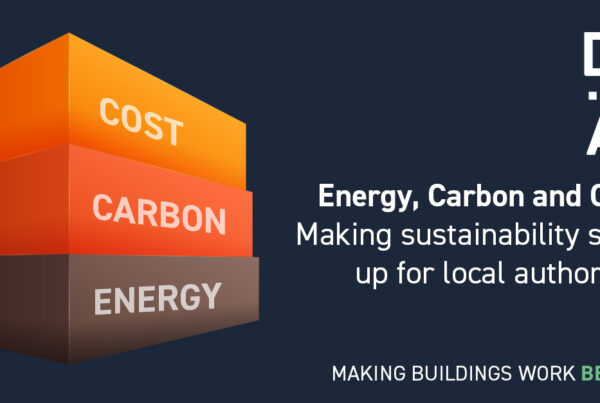
However, carbon and cost are far more closely aligned than many assume. By addressing energy inefficiencies across buildings, local authorities can reduce emissions while lowering operational expenditure, without compromising service delivery.
Understanding unnecessary carbon costs in civic buildings
Local authority estates are typically diverse and complex, spanning offices, schools, leisure centres, libraries, and community buildings.
Across these assets, unnecessary carbon emissions are often driven by:
- Poorly maintained or inefficient plant
- Systems operating outside of actual occupancy patterns
- Over-conditioning of spaces
- Limited visibility of real-time energy data
These inefficiencies increase energy demand, driving up both emissions and the cost of energy consumption across the estate.
Understanding unnecessary operational costs
Energy waste doesn’t just impact carbon targets, it directly affects already stretched public sector budgets.
For many local authorities, hybrid working has introduced additional inefficiencies. Buildings are frequently heated, cooled, or lit at full capacity despite reduced or inconsistent occupancy.
This results in:
- Higher-than-necessary energy bills
- Increased maintenance costs due to overworked assets
- Accelerated wear and earlier replacement cycles
- Greater risk of system failure and compliance issues
In effect, inefficient energy use becomes a hidden financial drain across the estate.
How carbon reduction lowers operational costs
The key principle is simple: reducing energy demand reduces both carbon output and operational cost.
In many local authority buildings, meaningful savings can be achieved through relatively low-cost interventions before major capital investment is required.
For example:
- Upgrading to LED lighting with occupancy or daylight sensors
- Optimising heating schedules to reflect actual building use
- Improving controls within existing systems
Aberdeen City Council, for instance, reported savings of over £300,000 per year after switching to LED lighting — demonstrating the scale of impact achievable through targeted upgrades.
In more energy-intensive environments such as leisure centres, optimising ventilation, heating, and pump systems can significantly reduce both consumption and cost. When combined with a well-configured Building Management System (BMS), these improvements enable demand-led operation and continuous performance optimisation.
When carbon reduction requires investment
While quick wins deliver immediate value, larger infrastructure upgrades are often necessary to achieve long-term targets.
For local authorities, the key is adopting a phased investment strategy, where early savings help fund future improvements.
Examples include:
- Solar photovoltaic (PV) systems to generate on-site energy
- Electrification of heating plant
- Upgraded plant and infrastructure for long-term efficiency
These investments not only reduce emissions but also provide:
- Greater energy security
- More predictable operational costs
- Reduced exposure to future price volatility
As demonstrated in healthcare estates such as Rye, Winchelsea & District Memorial Hospital, the integration of solar energy and battery storage, alongside the removal of gas and the electrification of heating systems, can deliver strong financial returns while also supporting broader service outcomes. This approach provides a scalable model that can be replicated across wider civic portfolios.
Rethinking return on investment in the public sector
For local authorities, traditional ROI models often focus heavily on upfront cost. However, this approach can undervalue the true benefits of sustainability.
A more effective evaluation considers:
- Maintenance savings from more efficient assets
- Extended asset lifespan due to reduced strain
- Avoided future costs from regulatory compliance or emergency upgrades
- Long-term operational savings across the estate
By adopting a whole-life cost perspective, sustainability becomes a financially strategic decision, not just an environmental one.
Aligning environmental and financial outcomes
So, does carbon reduction increase operational costs for local authorities? In practice, no.
Because both cost control and carbon reduction are driven by the same factor — energy efficiency — the two objectives naturally align when approached strategically.
For local authority estates, this means:
- Lower energy bills
- Reduced maintenance and lifecycle costs
- Improved building performance
- Greater resilience against future regulatory and market pressures
Sustainability is no longer a separate initiative. It is a core part of how public sector buildings should be operated, funded, and improved over time.
Final thought: carbon reduction starts with efficiency
For local authorities balancing financial pressures with climate commitments, the question is no longer whether sustainability is affordable.
It’s whether inefficiency is.
By addressing energy waste first and adopting a phased, data-led approach, local authorities can deliver measurable carbon reduction and meaningful cost savings, at the same time.
Ready to accelerate carbon reduction across your estate?
DMA Group works with local authorities to identify where energy is being wasted across entire estates, using data-led insights to prioritise action, optimise performance and deliver measurable savings.
Contact our Energy Services specialists to explore how small changes can deliver immediate cost and carbon savings.