

What Compliance Gaps Reveal About Modern Facilities Management in 2026
Facilities management compliance failures are rarely the result of deliberate neglect. In most organisations, estates teams are working hard to meet their statutory obligations while managing ageing assets, limited budgets and increasing regulatory complexity.
Despite best intentions, compliance gaps still emerge. Understanding why these gaps occur is the first step towards reducing risk and improving assurance.
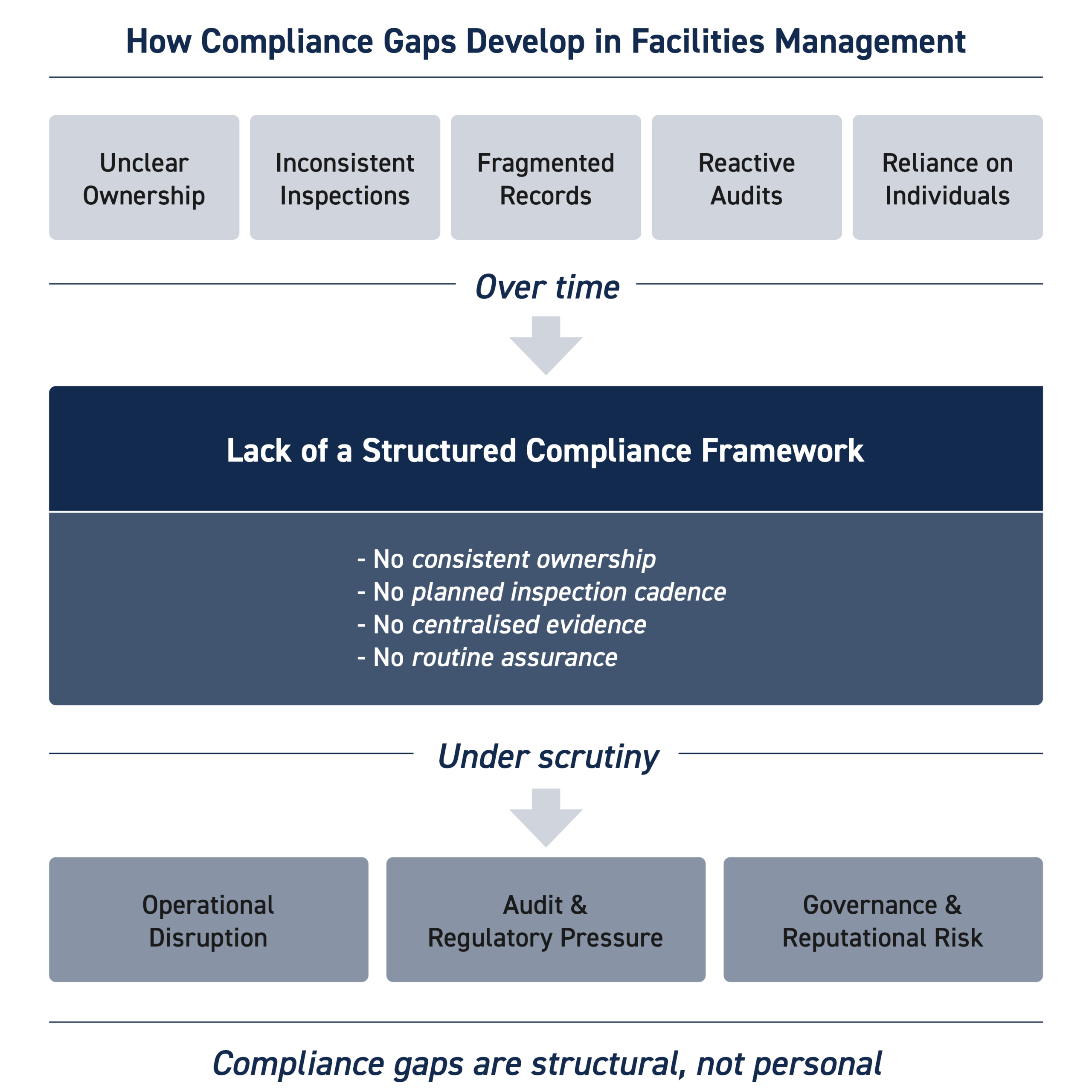
Compliance Gaps Are Usually Structural, Not Personal
One of the most common misconceptions about compliance is that failure stems from a lack of effort or care. Gaps tend to arise from structural weaknesses rather than individual oversight.
As regulatory requirements increase and audit scrutiny intensifies, estates teams are expected to manage more data, more inspections and more evidence than ever before. Without a clear framework, this complexity becomes difficult to control.
Gap 1: Unclear Ownership of Statutory Responsibilities
A frequent issue in FM compliance is ambiguity around responsibility. While estates teams may oversee statutory compliance in principle, accountability for specific assets, sites or actions is often unclear.
This can result in:
- Inspections being assumed rather than confirmed
- Remedial actions not being followed through
- Certificates existing but not being reviewed
Clear ownership does not mean one person doing everything. It means knowing who is accountable for completion, review and escalation.
Gap 2: Inconsistent Inspection Cadence
Many estates teams carry out statutory inspections, but not always at consistent or defensible intervals. This often happens when compliance is managed reactively, driven by reminders, calendar entries or individual knowledge.
In contrast, best practice aligns inspection cadence with recognised standards and risk profiles. Gas safety, electrical testing, fire systems and water hygiene all require regular, documented activity. Inconsistency increases exposure, particularly during audits.
Gap 3: Fragmented Compliance Records and Evidence
Compliance evidence is often spread across multiple locations:
- Contractor portals
- Emails
- Shared drives
- Paper files
When records are fragmented, assurance becomes fragile. During audits or investigations, time is lost locating documents, verifying accuracy or confirming validity.
Centralised, accessible records are essential not just for audits, but for day-to-day confidence that compliance obligations are being met.
Gap 4: Reactive Responses to Compliance Audits
Audits frequently reveal compliance gaps that have existed for some time. When this happens, organisations are forced into reactive mode, diverting time and resources to address issues under pressure.
A reactive audit response is a clear signal that compliance is not embedded into everyday FM activity. Proactive compliance frameworks reduce audit stress by ensuring readiness at all times.
Gap 5: Reliance on Individuals Rather Than Systems
Many estates teams rely heavily on experienced individuals who hold critical compliance knowledge. While this expertise is valuable, it also introduces risk.
Staff absence, role changes or organisational restructuring can quickly expose undocumented processes and informal practices. Compliance systems should be resilient to personnel changes, not dependent on them.
Gap 6: Limited Use of Technology — or Limited Understanding of What’s Available
A growing compliance gap in facilities management is not the absence of technology, but how technology is selected and used.
Many estates teams have digital systems in place, but are underused or inconsistently applied, creating a false sense of control. This often stems from systems that were not designed around compliance. Platforms focused on job management or reactive maintenance frequently lack the structure needed for inspection scheduling, evidence management and audit assurance. When compliance is treated as an add-on rather than a core requirement, gaps emerge.
Lack of understanding is another factor. Teams are often unaware of what their systems can do, or how they should be configured to support compliance. Without clear ownership or training, digital tools are bypassed in favour of familiar manual processes.
Technology can also hinder compliance when it is overly complex or poorly implemented. If systems do not reflect real FM workflows, confidence in the data erodes and teams revert to informal methods.
In multi-site estates, inconsistent adoption further weakens assurance. Different tools and processes across sites make it difficult to maintain a clear, defensible view of compliance at portfolio level.
The issue is rarely effort. It is misalignment.
Technology does not deliver compliance on its own. Structure comes first. When estates teams define clear processes, ownership and inspection regimes, digital systems can then be used effectively to provide visibility, consistency and audit-ready assurance.
How Structured Frameworks Close These Gaps
A practical compliance framework addresses these common gaps by introducing:
- Clear accountability structures
- Planned inspection schedules
- Consistent evidence capture
- Centralised records
- Regular internal assurance reviews
This approach mirrors best practice in other regulated sectors, where compliance is treated as a continuous discipline rather than a periodic task.
Why This Matters for Risk and Governance
Compliance gaps are not isolated FM issues. They represent organisational risk, with potential financial, operational and reputational consequences.
By addressing structural weaknesses rather than symptoms, estates teams can reduce exposure, improve assurance and support wider governance objectives.
In Summary
Good facilities management in 2026 is no longer defined by how quickly teams respond when something goes wrong. It is defined by how effectively risk is controlled before issues arise.
As compliance expectations increase and scrutiny intensifies, estates teams need more than effort and experience. They need structure — clear ownership, consistent inspection regimes, accessible evidence and routine assurance. When these elements are in place, compliance stops being reactive and starts supporting confidence, continuity and governance.
Understanding where compliance gaps come from is not about assigning blame. It is about building systems that make good practice repeatable. That is what good facilities management looks like in 2026.
Ready to move from identifying gaps to reducing risk?
DMA supports estates teams in embedding structured, risk-focused facilities management that improves compliance, visibility and governance confidence.
Talk to us about how good facilities management is delivered in 2026.